
Observe after rain or melt
Photograph roof runoff, slopes and the places water stays. Record how long it takes to clear and whether it reaches a walk or the house.
Note: Your Property... Our Reputation


Winnipeg price guide · 2026
Find out where the water starts and where it should go. Then compare a targeted surface correction, reshaping the ground and a more extensive drainage project.
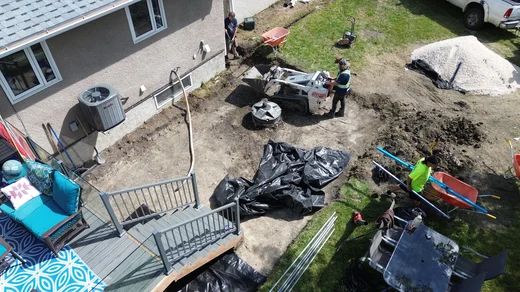
A short surface route, a full lot and a drain that needs restoration are different scopes. The original guide publishes these planning examples.
| Project component | Published guide range | Basis for comparison |
|---|---|---|
| Aeration or dethatching | $75–$225 | A lawn treatment when compaction is the relevant issue. |
| Surface swale | $5–$15 per linear ft | A surface route with room and an appropriate outlet. |
| French drain | $10–$25 per installed ft | The article’s drain example. Compare trench access, outlet and restoration when pricing your layout. |
| Dry well | $1,350–$4,255 per installation | Site and suitability determine whether this option belongs in the plan. |
| Regrading | $500–$5,000 | Depends on affected area and the amount of soil to shape. The full-lot example is $2,500–$5,000. |
The separate estimator assigns allowances to site work, drains and restoration individually. Its project scenarios have different scopes from these published article examples.
Photos from a wet period help the crew see a route that may be hard to find during a dry site visit.
Photograph roof runoff, slopes and the places water stays. Record how long it takes to clear and whether it reaches a walk or the house.
Look for the existing grading plan and proposed outlet. The City provides guidance for changes to drainage patterns.
Surface restoration, access and obstructions matter to the estimate. Include what the work has to pass around or disturb.
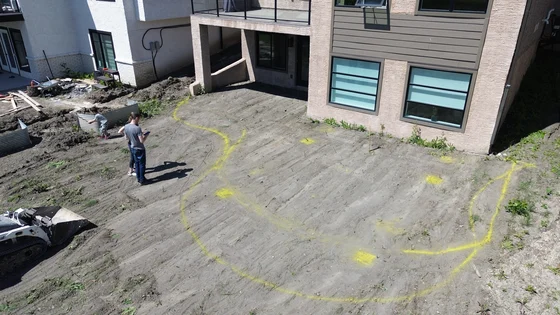
An exposed site lets you see where soil will meet the paving and lawn. Discuss those edges with the drainage plan.
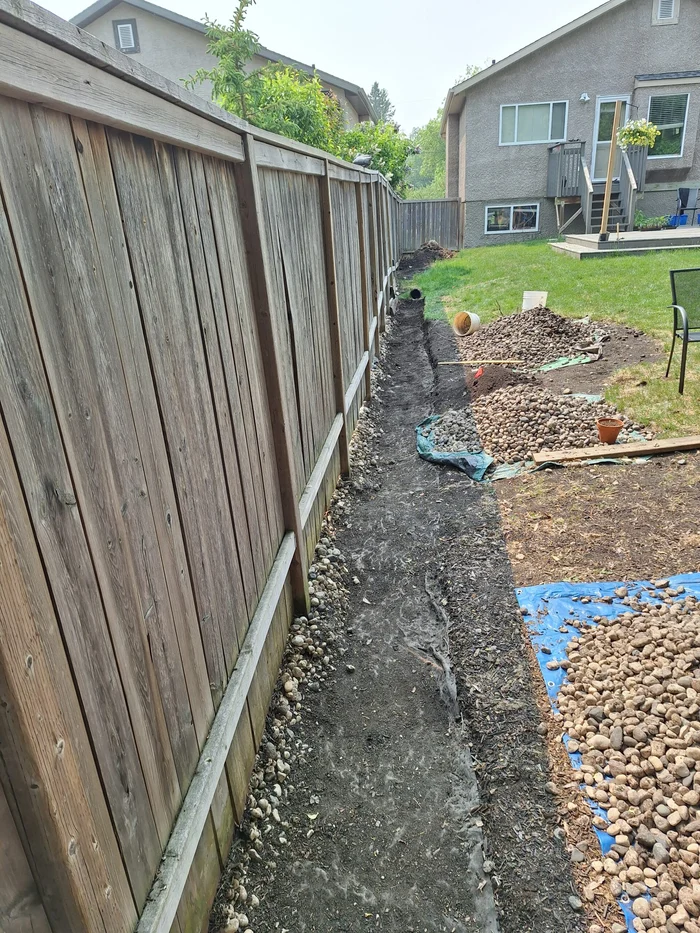
Follow the levels at the lawn, wall and walk. Identify the way water travels beyond the area you want repaired.
The cause can be a low spot, roof runoff, an obstructed route or another site condition. Review the whole path of the water before choosing the correction.
Write down the length and area being worked on, what outlets or connections are included, and what surfaces will be restored.
A grading plan if available, a sketch of the problem area and photos after rain or melt are useful.
A free on-site estimate
We’ll walk the grades and discuss a correction that suits the lot, access and finished surfaces.